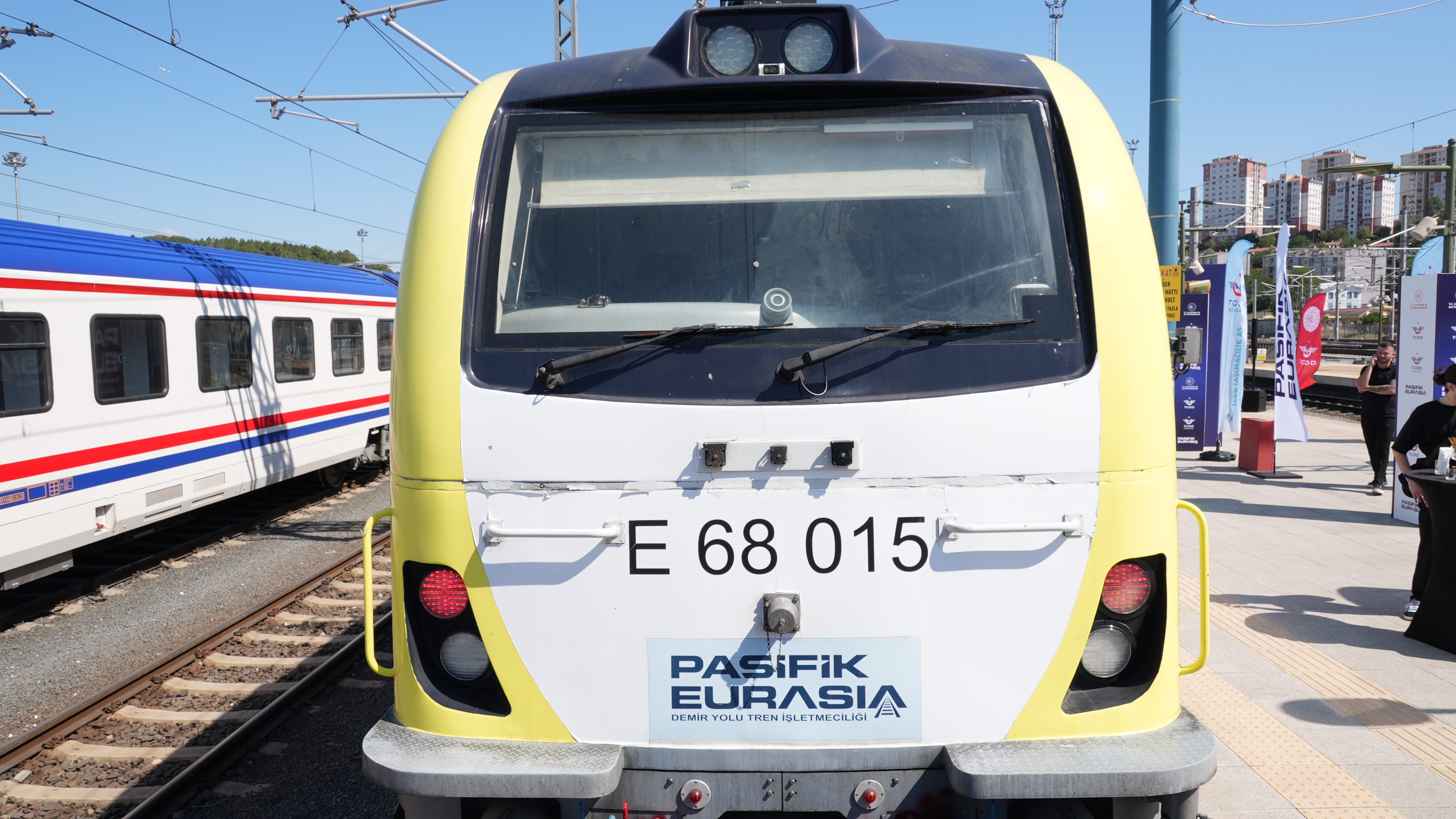
Pasifik Eurasia to strengthen Türkiye’s global logistics power through the middle corridor
A subsidiary of Pasifik Holding—which operates in four main sectors with 55 companies and continues to grow through ambitious projects and initiatives in logistics, technology, defense, energy, real estate, and construction—Pasifik Eurasia has reached a strategic agreement with China Railway to unlock the full potential of railway transport along the Middle Corridor. Following a visit to China in May with the Turkish Ministry of Transport and Infrastructure, Pasifik Eurasia signed the “International Container Transport Agreement” on June 17, 2025, with China Railway International Multimodal Co. Ltd., a subsidiary of China Railway, the top authority in Chinese railway logistics. Under this agreement, Pasifik Eurasia will initially operate ten block train services and then continue regular operations, targeting 1,000 trains per year in the first phase.
Pasifik Holding Chairman of the Board Fatih Erdoğan stated that Pasifik Eurasia had previously signed agreements with logistics platform companies of several Chinese provinces, while this latest cooperation was signed with the state-owned enterprise coordinating the activities of 57 railway logistics platforms. Emphasizing that collaborating with a company recognized as the authority in Chinese railway transport will bring new opportunities in the near future, Erdoğan said: “Through this agreement, we aim to achieve rapid growth in transportation volume along the Middle Corridor and reach 1,000 block train trips annually in the initial phase. We are also working on new agreements to further expand these goals and capacities. During the ‘Global Transport Corridors Forum 2025,’ organized by our Ministry of Transport and Infrastructure and inaugurated by our President between June 27–29, with ministerial-level participation from more than 50 countries—and where we will serve as the main sponsor as Pasifik Holding—we aim to sign new strategically important agreements with our Chinese counterparts.”
Erdoğan highlighted that all these developments support both Türkiye’s strategy of becoming a logistics hub and Pasifik Eurasia’s goal of becoming a main player in the Middle Corridor.
Our Agenda: The Middle Corridor
Fatih Erdoğan emphasized that in an era when global trade, energy security, and geopolitical influence are largely shaped through logistics networks and transport corridors, trade routes have become not only economic but also central elements of geopolitical and security architecture.
Pointing out that one of the most significant developments of the first quarter of the 21st century is the rapid transformation of global trade networks driven by geopolitical and geo-economic shifts, Erdoğan said: “Within the framework of China’s Belt and Road Initiative, launched in 2013 as a visionary project, the global balance of trade routes has been reshaped, bringing the importance of the Middle Corridor to the forefront. Through the Middle Corridor, Türkiye is evolving—beyond being a regional transit route—into a central country strategy, both in terms of geopolitical context and structural reality.” He added that Türkiye, as the key country along this corridor, holds critical advantages in logistics, energy, digitalization, and sustainability.
A balanced, resilient, and strategically deep route
Explaining that the Middle Corridor is a trade route extending from China through Kazakhstan, the Caspian Sea countries, Azerbaijan, Georgia, and Türkiye to Europe, Erdoğan said: “In our vision, this route goes beyond being an alternative and offers Türkiye significant opportunities both geographically and economically. The Middle Corridor has the potential to provide cost advantages and time savings compared to other freight transport routes. In the medium and long term, with the initiatives and investments of our Ministry of Transport and Infrastructure and other related ministries, we expect this corridor to reach full capacity and efficient utilization. During this process, Pasifik Eurasia will act as a locomotive driving these goals forward.”
Erdoğan explained that the Northern Corridor, which runs from China through Kazakhstan, Russia, and Belarus to Europe, was the most functional land route between 2015 and 2021 but that the Russia–Ukraine war exposed its geopolitical vulnerabilities, making transport along the corridor riskier due to possible economic and logistical sanctions.
He also noted that geopolitical tension and insecurity at sea have been escalating due to political and military conflicts, adding that the Southern Corridor, extending mainly by sea from China to Europe, remains fragile because of the high geopolitical risks stemming from countries and regions along the route. Erdoğan underlined that the Middle Corridor, in contrast, is a balanced, resilient, and strategically deep route.
Stressing that for the Middle Corridor to reach its full potential, joint railway modernization, coordination of logistics hubs, and digital border gate projects must be implemented among Türkiye, China, EU countries, Azerbaijan, Georgia, Kazakhstan, and other members of the Organization of Turkic States, Erdoğan said: “In addition, major steps are being taken to enhance cross-border e-commerce and financial integration, and this momentum will only accelerate.” He added that, as indicated in reports by the World Bank, the EU, and China, they expect the region’s trade volume to increase by 50% by 2030, which presents a major opportunity for Türkiye.
Türkiye’s potential as a global trade hub
Emphasizing that Türkiye must position itself as a logistics hub at the crossroads of Asia, Europe, and Africa by focusing on green transformation and digitalization to capture a larger share of the EU supply chain, Erdoğan said: “The forecast that the global logistics market, valued at 9.4 trillion dollars in 2023, will exceed 20 trillion dollars by 2033 presents a major growth opportunity for Türkiye. Moreover, structural trends such as e-commerce, urbanization, and rising prosperity are increasing the demand for railway transport.”
Erdoğan concluded: “Joint green energy investments are being encouraged to enhance energy supply security and reduce regional carbon emissions. These projects, aligned with Türkiye’s 2053 net-zero carbon target, will reshape the region’s energy policy and make railway logistics even more advantageous. Through the Middle Corridor and the initiatives led by Pasifik Eurasia, which places this corridor at the center of its strategy, we are proud to contribute to Türkiye’s economy and regional stability.”